Tariff Talk and Tehran Tension

This Week in the Market
The market is currently driven by the reaction to the Supreme Court ruling on tariff authority, along with renewed geopolitical noise surrounding Iran. The tariff decision reinforces institutional checks and reduces the likelihood of sudden unilateral trade escalation, which markets are interpreting as stabilizing rather than disruptive.
At the same time, tension involving Iran has added a layer of risk premium, particularly across energy markets. However, there has been no meaningful disruption to global flow, and diplomatic channels remain active. In our view, markets are responding more to headline intensity than to fundamental deterioration. Unless escalation materially changes the economic backdrop, the current environment appears more reactive than negative.

IPO Hype
IPO hype has returned as a growing number of private companies prepare to go public this year. After a long period of delay and valuation reset, investors appear more confident in market conditions and pricing stability.
Several high-profile names, including OpenAI, Anthropic, SpaceX, and Discord, plan to IPO this year.
The next section will outline some important considerations before trading new IPOs.
IPO's and Lockup Dynamics
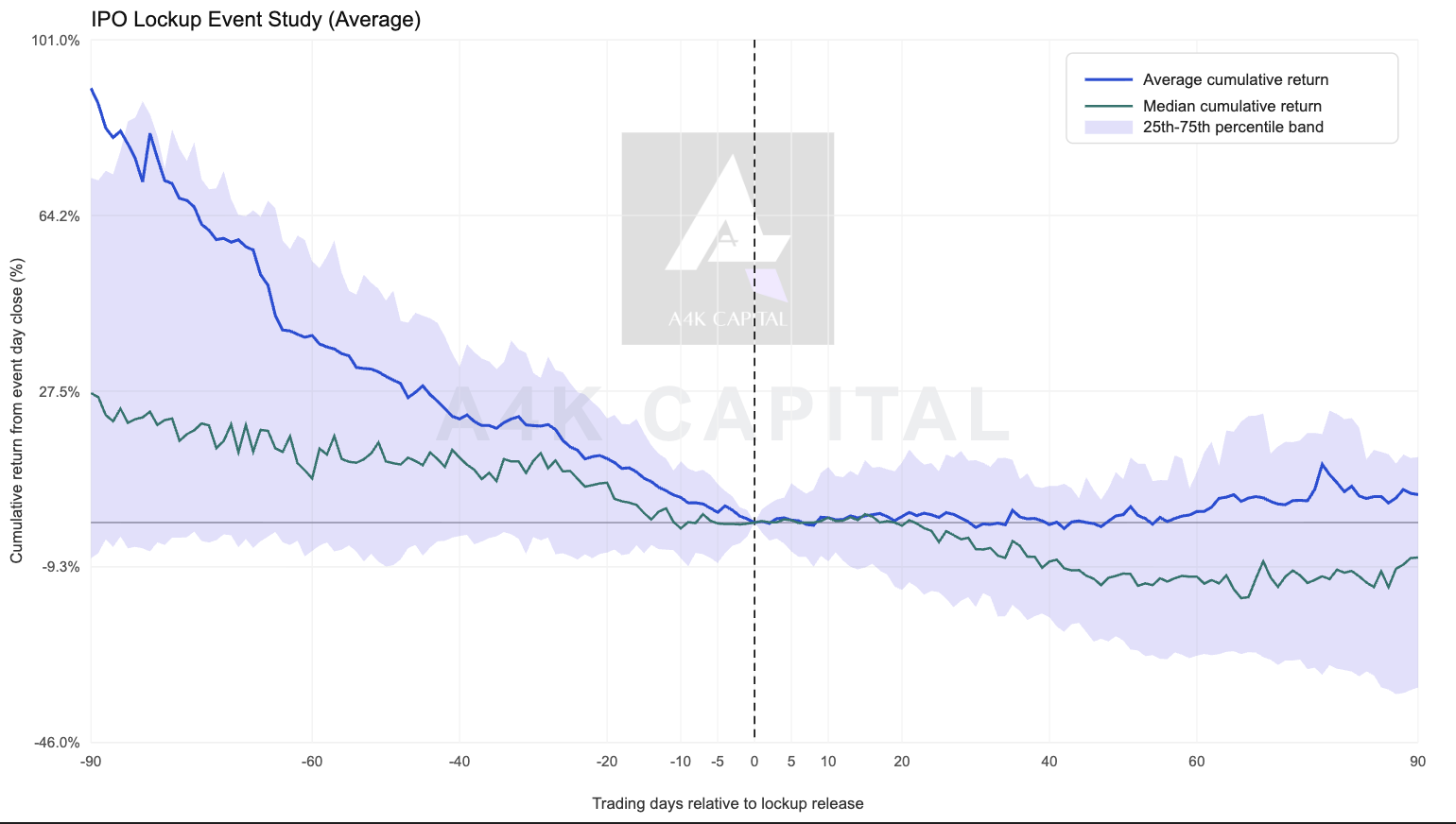
The chart above analyzes over 100 tech companies with a market cap above 300 million and shows a clear pattern around IPO lock-up expiration.
A lock-up is a contractual period, typically around 180 days after an IPO, during which insiders, founders, and early investors are restricted from selling shares. When that period expires, a large block of previously locked shares suddenly becomes eligible for sale, increasing supply.
This surge in potential selling often pressures prices lower, especially if valuations remain elevated after initial IPO hype. As the data suggests, many stocks drift down into and after the lock-up release.
There are many ways to make money from this, including shorting the stock, selling calls, and credit spreads. Our favorite is to short the stock, buy calls to hedge, and sell puts to pay for the calls. This method drops the Sharpe ratio from a raw short but avoids tail risk.
Disclaimer: At any time, A4K Capital and its affiliates may hold positions in the assets and/or contracts discussed. The content in this newsletter is for informational and educational purposes only and should not be considered financial, investment, or legal advice. A4K Capital and its affiliates are not responsible for any financial losses or decisions made based on the information provided.
